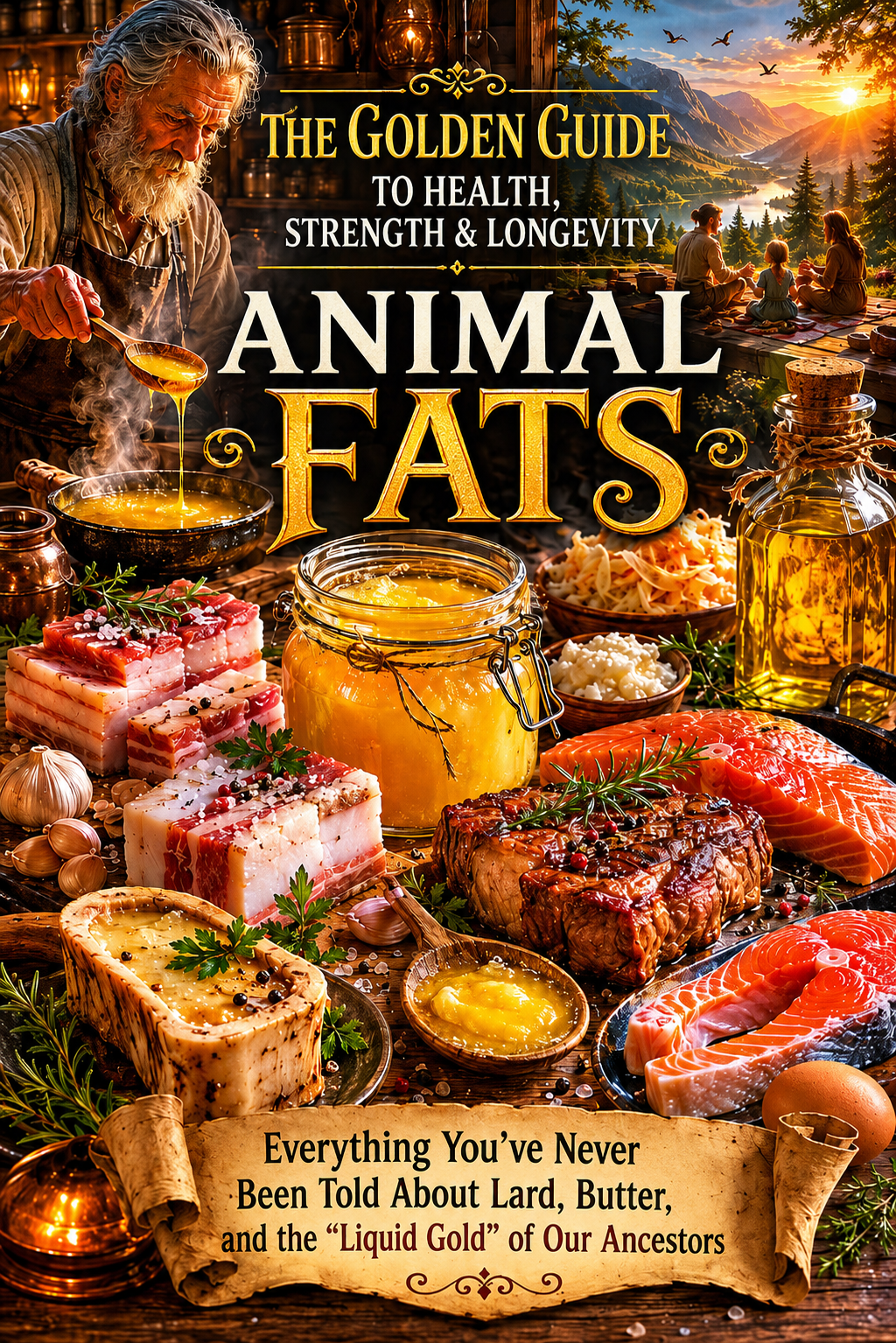
What’s Inside This Guide
-
I
Our Brain’s Secret: Why We Became Human?Introduction: Who’s Who in the World of Fats1
-
II
An Overview of "Golden Fats" for Your TableGhee, Lard, Bone Marrow, and Forest Healers2
-
III
12 Scientific Facts: The Secret Power on Your PlateWhat Low-Fat Product Commercials Stay Silent About3 - 4
-
IV
25 Perfect Pairings: Synergy for Your OrgansHow One Product Enhances the Benefits of Another5
-
V
Myths and the Kitchen: The Truth About Cholesterol and FryingThe PURE Study · Smoke Point Table6 - 7
-
VI
Oceanic Animal Fats: Fish Oil and Krill OilDeep-Sea Lipids · Omega-3 · Astaxanthin · Comparative Table8 - 9
-
VII
Making Ghee: Three Proven MethodsOn the Stovetop · In the Oven · In a Slow Cooker · Storage Tips10 - 11
-
VIII
12 Household Life Hacks: Fat to the RescueHistory's First Universal Tool12
-
IX
12 Ways to Remove a Grease StainProfessional Cleaning Secrets13
-
X
Heritage Beauty: Elixirs of YouthLanolin, Tallow Cream, Bear and Badger Fat14
-
XI
Top 12 Movies About Animal FatsFilms and Cartoons Celebrating Natural Fats15 - 16
-
XII
Who Should Exercise CautionContraindications and an Individual Approach · Disclaimer17
-
XIII
How to Gradually Introduce Animal FatsA Practical and Gentle Transition18
-
XIV
How to Choose High-Quality Animal FatsGood Signs · What to Avoid19
-
XV
Scientific Foundation: The Sources We Relied UponClinical Studies, Core Methodology, and Medical Journals20 - 21
The Brain's Secret: Why We Became Human?
Did you know that our brain is nearly 60% fat? When healthy fats are cut from your diet, the brain is deprived of essential building blocks, leading to poor memory, scattered focus, brain fog, and chronic fatigue. Our ancestors valued animal fat as a vital source of energy, and modern science confirms it.
Fatty acids from fish, eggs, and meat — specifically DHA and AA — are the building blocks of nerve cells and their protective sheaths. Without them, children struggle to learn, and adults tire faster.
Who's Who in the World of Fats
📊 Quick Check: Is Your Brain Starving for Lipids?
Tick the boxes if you have experienced any of the following over the past month:
💡 If you checked even two boxes, your cellular membranes are likely running on empty. This guide will show you exactly how to refuel them efficiently.
A Review of "Golden Fats" for Your Table
12 Scientific Facts: The Hidden Power on Your Plate · Part 1
Here is what mainstream advertising for low-fat products leaves unsaid.
12 Scientific Facts: The Hidden Power on Your Plate · Part 2
25 Perfect Pairings: Synergy for Your Organs
How to combine foods so that one amplifies the benefits of the other.
The Truth About Cholesterol and Frying · Part 1
The Ultimate Myth: "Is Fat Bad for Your Heart?"
Many people fear fat because of cholesterol. However, the landmark PURE study — a massive undertaking involving over 135,000 participants — revealed a far more nuanced picture of how animal fats impact health than previously thought. The data linked moderate consumption of natural fats to a lack of the expected increase in all-cause mortality.
The real enemy of health is the inclusion of sugar, "chemical" trans fats from margarine, and other unnatural fats in your diet.
Unnatural fats are synthesized or artificially modified lipid compounds. These include trans fats (hydrogenated oils) and artificial substitutes engineered to mimic the taste and texture of natural products. They are widely used in the food industry to extend shelf life.
Primary types of unnatural fats:
- Industrial trans fats: Liquid vegetable oils converted into solid fats through chemical hydrogenation. Commonly found in margarine, cheap butter, fast food, and baked goods.
- Synthetic fats (olestra): Artificially created compounds of sugar and fatty acids that the body cannot digest. Used as low-calorie fat substitutes.
- Ultra-refined industrial oils: Blended fats for pan-frying and deep-frying derived from cheap plant sources via chemical modification — including non-cold-pressed sunflower, canola, soy, corn, and palm oils.
The Truth About Cholesterol and Frying · Part 2
Kitchen Cheat Sheet: Best Fats for Frying
| Fat | Smoke Point | Stability | Best Use |
|---|---|---|---|
| Ghee (Clarified Butter) | 250 °C | Extreme | Steaks, Asian cuisine |
| Beef Tallow | 205–250 °C | Very High | Deep-frying, roasting |
| Lard (Pork Fat) | 185–200 °C | High | Baking, sautéing |
| Chicken Fat | 190 °C | Medium | Sautéing, sauces |
| Duck / Goose Fat | 190 °C | Medium | Roasting potatoes |
| Butter | 150–175 °C | Low | Fried eggs, adding to porridge |
Many people avoid animal fats for frying, choosing seed oils (sunflower, corn, soy) thinking they are "heart-healthy." In reality, when heated, these chemically refined oils undergo a disastrous transformation.
Oceanic Animal Fats: Fish Oil and Krill Oil · Part 1
Comparison Table: Fish Oil vs. Krill Oil
| Parameter | Fish Oil | Krill Oil |
|---|---|---|
| Omega-3 Form | Triglycerides | Phospholipids |
| Bioavailability | Standard | 30–50% Higher |
| Antioxidant | Vitamin E (added) | Astaxanthin (natural) |
| Choline | None | Present |
| Stability | Light-unstable | Protected by astaxanthin |
| Price | Affordable | Above average |
The top choice is krill oil for daily supplementation.
Fish oil remains a time-tested and more affordable alternative.
Bottom line: either option is far better than lacking them in your diet entirely.
How to Make Ghee: Three Proven Methods · Part 1
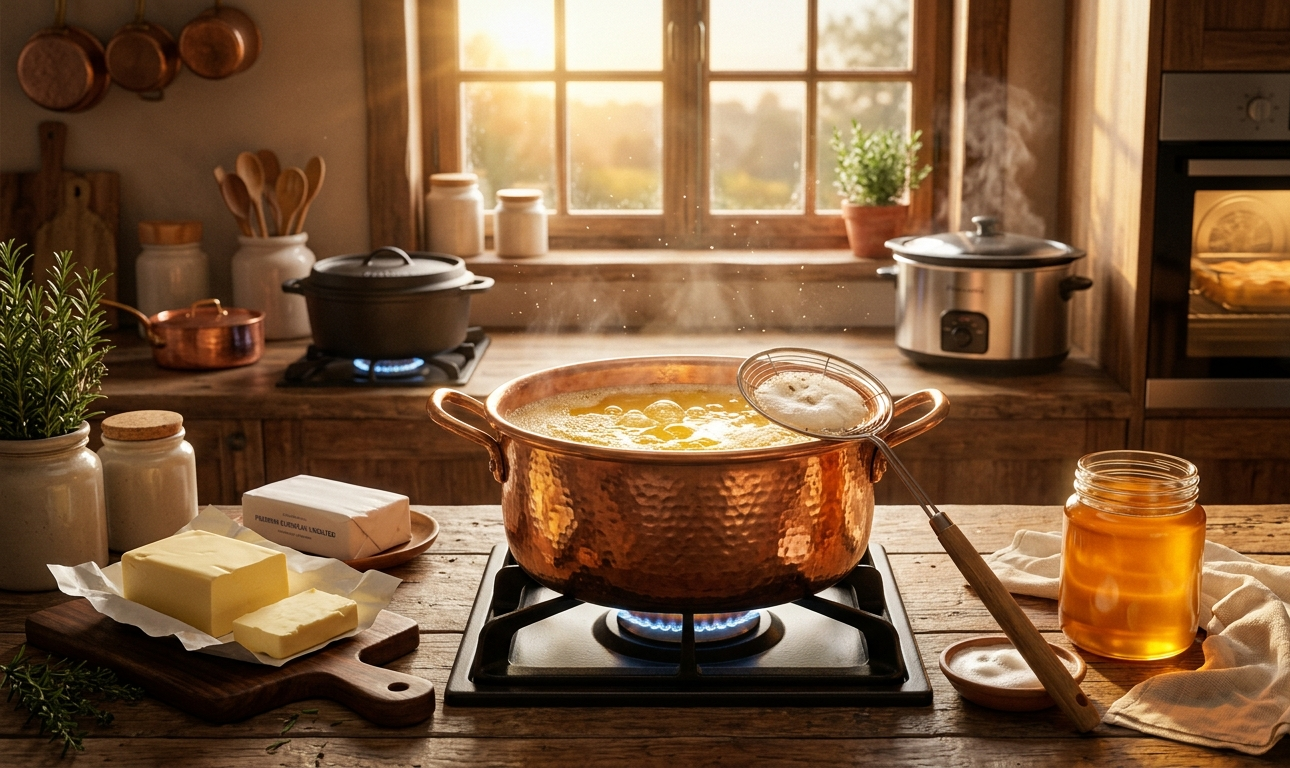
Recipe 1. The Classic Stovetop Method ("Grandma's Style")
How to Make Ghee: Three Proven Methods · Part 2
Recipe 2. The Lazy Oven Method
Preheat your oven to 150–160°C. Place the butter in a glass baking dish (with sides 3–4 cm higher than the butter level). Bake for 1.5–2 hours per kilogram. Alternatively, for a gentle approach that preserves maximum nutrients, bake at 80–90°C for 5–6 hours.
Recipe 3. The Modern Slow Cooker Method
Use the "Slow Cook" or "Simmer" setting at 85°C for 10–12 hours with the lid open. Skim off the foam with a slotted spoon, then strain through 3–4 layers of cheesecloth into a jar.
12 Household Life Hacks: How Fat Helps Around the Home
12 Ways to Remove a Grease Stain
Heritage Beauty: Elixirs of Youth
✨ Did You Know?
Historical records show that Cleopatra’s legendary youth-preserving creams weren't made from plant oils, but relied heavily on purified animal lipids mixed with honey and rosewater. Because these fats share an identical cellular blueprint with human skin, they bypassed the surface barrier, delivering deep hydration that ancient nobility swore by.
Top 12 Films About Animal Fats · Part 1
Where characters admire the flavor and power of natural fats.
"Fat is not the enemy.
Fat is your energy, your hormones, and a sharp mind!"
Top 12 Films About Animal Fats · Part 2
Who Should Exercise Caution
It is crucial for certain individuals to exercise particular caution:
When in doubt — consult a qualified specialist.
Understanding your own body is far more important than any general advice.
Disclaimer
This book is for educational and informational purposes only and does not substitute for professional medical advice, diagnosis, or treatment. Any dietary changes should be adapted to individual health profiles.
How to Gradually Introduce Animal Fats
A Practical and Gentle Approach
For thousands of generations, human physiology evolved on nutrient-dense animal fats. The temporary "heaviness" some experience today isn't a rejection of fat, but a reflection of modern low-fat diets slowing down bile production. By introducing high-quality fats **gradually**, you gently signal your liver and gallbladder to wake up their natural, ancestral digestive strength.
How to Choose High-Quality Animal Fats
- Minimal processing
- Transparent sourcing
- Absence of a rancid odor
- High-quality raw ingredients
- Grass-fed (whenever possible)
- Cheap hydrogenated products
- Artificial flavors
- Prolonged overheating
- Questionable origin
Aintos